


Why Most Websites Lose Rankings (And How to Fix It for 2026)
For years, SEO has been oversimplified. Most businesses believe that if a website is not ranking, the problem must be:
- Wrong keywords
- Not enough content
- Lack of SEO tools
This belief has caused more SEO failure than almost any algorithm update.

The truth is far more uncomfortable:
Most websites do not lose rankings because of bad keywords.
They lose rankings because SEO fails before keywords even matter.
In 2026, search engines are no longer ranking pages in isolation. They are evaluating entire systems — structure, performance, intent, and user behavior combined.
Keywords do not fix broken systems.
They only expose them.
This article explains why SEO fails before keywords, what most websites get fundamentally wrong, and how to build a future-proof SEO foundation for 2026 and beyond.
Why This Topic Is Critical in 2026
Search engines have changed dramatically.
Google and other AI-driven search systems now evaluate:
- Website architecture
- Topical authority
- Page performance and stability
- Search intent satisfaction
- User engagement signals
- Consistency and trust
In 2026, SEO is no longer about optimization tricks.
It is about earning trust at scale.
Websites that rely on keywords alone experience:
- Ranking volatility
- Temporary visibility
- Traffic that doesn’t convert
Websites built on strong foundations experience:
- Stable rankings
- Compounding visibility
- Predictable growth
Understanding where SEO actually fails is the difference between the two.
The Biggest SEO Misconception: Keywords Are Not the Starting Point
Most SEO campaigns begin with this question:
“What keywords should we target?”
That question assumes something critical — that the website is already capable of ranking.
Many websites are not.
They suffer from:
- Structural confusion
- Performance limitations
- Weak authority flow
- Search intent mismatch
When keywords are added to a weak foundation, SEO does not improve.
It becomes unstable.
SEO failure usually begins below the surface, long before keyword research starts.
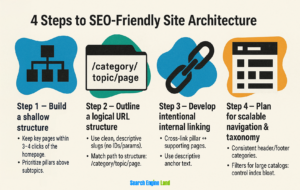
1. Poor Site Structure: When Search Engines Can’t Understand Your Website
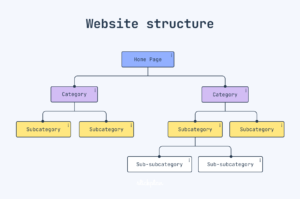
Site structure is the architecture of SEO.
It defines:
- How pages are organized
- How topics relate to each other
- Which pages are important
- How authority flows across the site
In 2026, structure is one of the strongest ranking differentiators.
What Poor Site Structure Looks Like
- Multiple pages targeting the same service or keyword
- No clear parent–child hierarchy
- Blogs isolated from service pages
- Flat navigation with no topical depth
- Inconsistent or meaningless URLs
 From a search engine’s perspective, this creates confusion:
- Which page should rank?
- What is this website actually authoritative about?
- Where should ranking signals flow?
When structure is unclear, Google cannot confidently rank pages — even if the content is good.
Why Structure Matters More Than Keywords
Keywords explain what a page is about.
Structure explains how important that page is.
Without structure:
- Authority is diluted
- Crawl budget is wasted
- Rankings fluctuate
- Pages compete with each other
In 2026, websites must be built around topical authority — not scattered content.
2. Slow Pages: Performance Is a Trust Signal in 2026
Page speed is no longer a technical checkbox.
It is a trust and ranking signal.
Search engines measure:
- Load time
- Interaction delay
- Visual stability
- Real user behavior
Why Slow Pages Silently Kill SEO
Slow pages cause:
- High bounce rates
- Short session duration
- Low engagement
- Poor conversion behavior
 Search engines interpret this as:
“This result did not satisfy the user.”
No keyword optimization can override poor experience signals.
In 2026, fast, stable, mobile-first websites consistently outperform slower designs — even with less content.
2026 Performance Expectations
- Lightweight pages
- Stable interaction
- Mobile-first experience
- Minimal scripts and bloat
Performance is no longer just SEO.
It is search trust engineering.
3. Weak Internal Linking: Authority That Never Reaches Important Pages
Internal linking is one of the most powerful and ignored SEO fundamentals.
Internal links tell search engines:
- Which pages matter most
- How topics are related
- Where authority should flow
Most websites:
- Link randomly
- Over-link low-value pages
- Ignore internal linking strategy completely
What Weak Internal Linking Causes
- Pages rank briefly, then disappear
- Service pages never gain strength
- Crawl budget is wasted
- SEO feels inconsistent
Internal links are not decoration.
They are direction.
2026 Solution: Intent-Driven Internal Linking
- Support topical clusters
- Strengthen core money pages
- Match search intent
- Guide users and crawlers
Strong internal linking stabilizes rankings and improves conversions simultaneously.
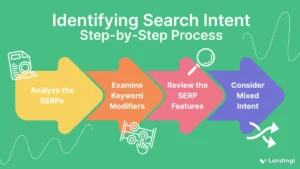
4. Confused Search Intent: The Fastest Way to Break Rankings
Search intent is why a user searches.
Search engines prioritize intent satisfaction over keyword matching.
Common Intent Mistakes
- Informational searches landing on sales pages
- Transactional searches answered with long blogs
- One page trying to rank for multiple intents
When intent is mismatched:
- Rankings fluctuate
- Visibility is temporary
- Traffic doesn’t convert


2026 Solution: One Page, One Intent
- One primary intent
- One audience stage
- One clear outcome
Precision beats volume every time.
Why SEO Tools Alone Fail in 2026
SEO tools are more advanced than ever.
But tools diagnose problems — they do not fix systems.
They cannot:
- Design site architecture
- Align intent
- Improve UX clarity
- Build trust signals
Over-reliance on tools leads to shallow fixes and temporary gains.
In 2026, strategy matters more than software.
The Correct SEO Framework for 2026
- Website architecture & topical authority
- Performance & user experience
- Internal linking & authority flow
- Search intent alignment
- Content depth & usefulness
- Keyword optimization
Most websites reverse this order — and fail.
Practical, Actionable Fixes (2026-Ready)
- Fix site structure: Define core topics, remove duplicate intent pages, create clear hierarchies
- Improve performance: Reduce scripts, optimize images, prioritize mobile UX
- Strengthen internal linking: Link intentionally, support core pages, avoid random linking
- Align search intent: Separate informational and transactional pages
- Optimize keywords last: After foundations are solid
Frequently Asked Questions
Does SEO really fail before keywords?
Yes. Keywords assume the website is structurally capable of ranking. Weak foundations magnify problems instead of solving them.
Why do rankings fluctuate so often?
Usually due to intent mismatch, weak internal linking, or performance issues — not competition.
Is SEO still worth investing in for 2026?
Yes, but only when built on strong foundations. Shortcut SEO is fading. System-based SEO is growing.
What is the biggest SEO mistake businesses make?
Starting with keywords instead of structure, intent, and experience.
Final Thought: SEO in 2026 Is About Trust, Not Tricks
SEO does not fail suddenly.
It fails quietly — before keywords ever matter.
In 2026:
- Trust beats tactics
- Structure beats volume
- Experience beats optimization
SEO starts with foundations, not tools.
Fix the base — rankings follow.
— Kinix Digital