

The End of Traditional Digital Marketing: Welcome to the AI Automation Era
The biggest shift in digital marketing isn’t coming—it’s already here.
Imagine waking up tomorrow and discovering that your biggest competitor isn’t another agency, a global brand, or a company with a massive advertising budget. Instead, it’s an AI-powered marketing system that works 24/7, never takes a break, analyzes millions of data points in seconds, launches campaigns automatically, optimizes advertising budgets in real time, writes high-quality content, qualifies leads, responds to customers instantly, and continuously improves its own performance.
This isn’t science fiction. This is the new reality of digital marketing.
Over the last two decades, digital marketing has evolved from simple websites and email campaigns into a complex ecosystem that includes SEO, PPC, content marketing, social media, email automation, influencer marketing, analytics, CRM systems, AI search, voice search, video marketing, and much more.
For years, businesses competed by hiring larger marketing teams, creating more content, publishing more social posts, building more backlinks, and spending more money on advertising.
That strategy worked.
But the rules have changed.
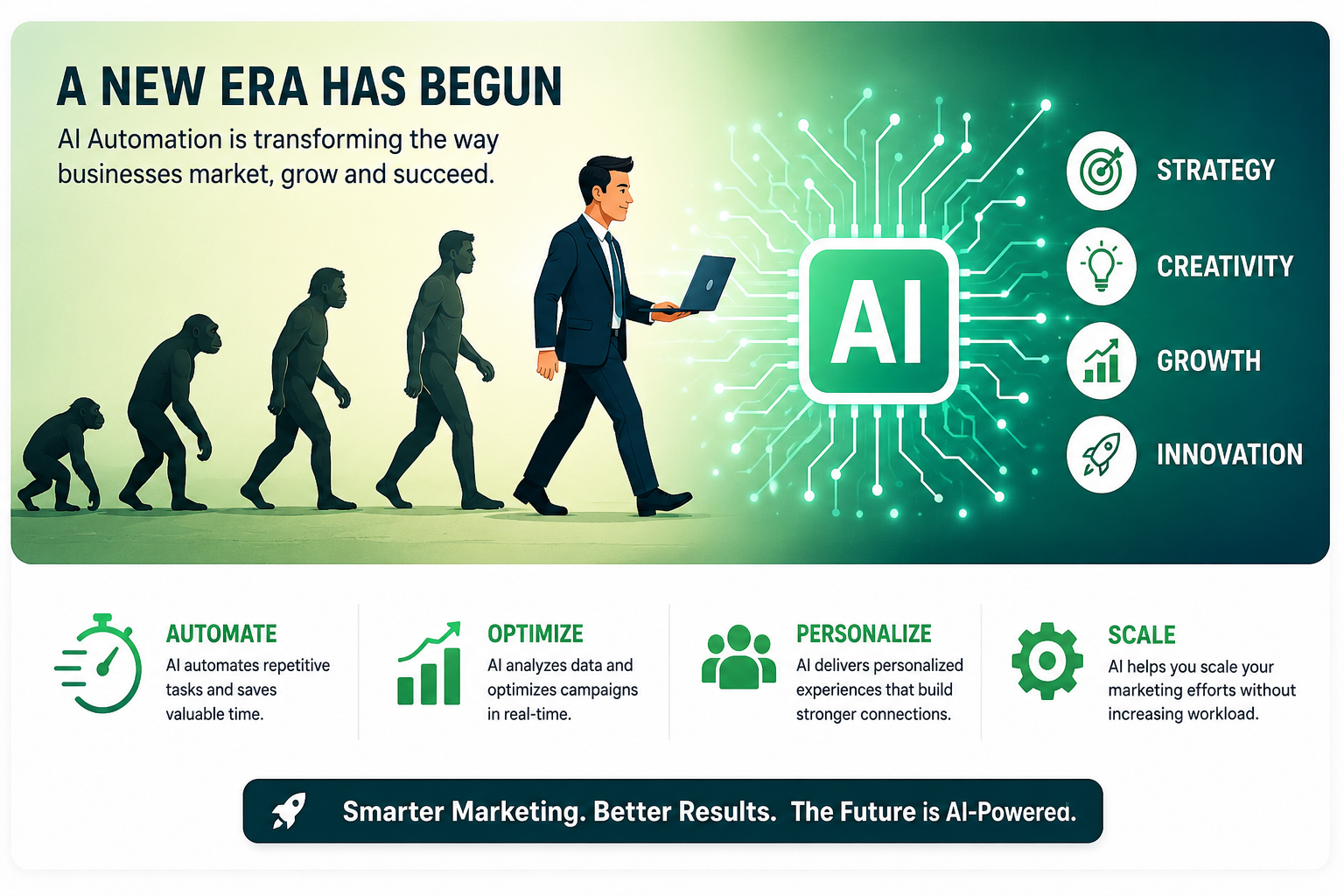
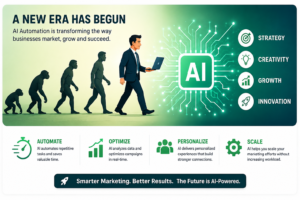
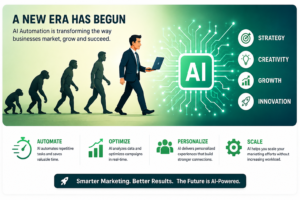
A New Era Has Begun
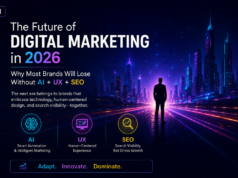
Artificial Intelligence is transforming how businesses attract customers, generate leads, optimize campaigns, and grow revenue. The future isn’t about working harder—it’s about building intelligent marketing systems that automate repetitive work while helping marketers make faster and better decisions.
 Today’s leading companies aren’t asking, “How many marketers do we need?” Instead, they’re asking, “How can AI help our marketing team achieve more with less manual effort?”
This shift marks the beginning of the AI Automation Era.
Traditional Digital Marketing Is Reaching Its Limits
Digital marketing has become more complex than ever before.
- SEO requires continuous optimization.
- Google Ads need daily monitoring.
- Social media demands consistent content.
- Email campaigns require personalization.
- Analytics generate thousands of data points.
- Customers expect instant responses.
Managing all of these channels manually is becoming increasingly difficult.
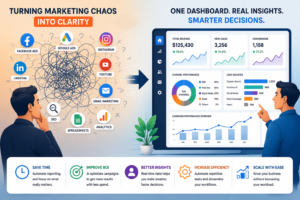
Marketing teams spend countless hours creating reports, updating spreadsheets, researching keywords, scheduling content, responding to leads, and moving information between different tools.
These repetitive tasks consume valuable time that could be spent on strategic planning, creativity, customer experience, and business growth.
The Hidden Cost of Manual Marketing
Many marketers underestimate how much time is lost every week performing repetitive tasks.
- Checking keyword rankings
- Creating SEO reports
- Updating CRM records
- Analyzing competitors
- Publishing blog posts
- Scheduling social media
- Writing follow-up emails
- Reviewing campaign performance
- Preparing client reports
- Monitoring website performance
Individually, these tasks seem small. Together, they can consume dozens of hours every week.
AI automation allows marketers to reduce time spent on repetitive execution and focus more on activities that require human expertise.
What Is AI Marketing Automation?
AI marketing automation combines artificial intelligence with workflow automation to streamline marketing operations.
Instead of using isolated tools for different tasks, businesses connect their entire marketing ecosystem into intelligent workflows.
For example:
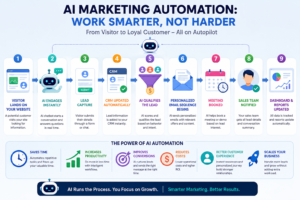
- A visitor lands on your website.
- An AI assistant starts a conversation.
- The visitor submits a contact form.
- The CRM creates a new lead automatically.
- AI qualifies the lead.
- A personalized email sequence begins.
- A meeting is scheduled.
- The sales team receives a summary.
- Analytics dashboards update automatically.
What previously required multiple team members can now happen within minutes through connected automation.
AI Doesn’t Replace Marketers—It Empowers Them
One of the biggest misconceptions about AI is that it replaces marketing professionals.
In reality, AI changes the nature of marketing work.
Instead of spending hours on repetitive tasks, marketers can focus on:
- Business strategy
- Creative campaigns
- Brand positioning
- Customer experience
- Growth planning
- Innovation
- Relationship building
AI becomes a powerful assistant, while humans continue to provide creativity, leadership, and strategic thinking.
Benefits of AI Automation
- Faster campaign execution
- Improved marketing efficiency
- Lower operational costs
- Better customer personalization
- Real-time analytics and reporting
- 24/7 lead generation and support
- Improved conversion optimization
- Reduced human error
- Scalable marketing operations
- More time for creative work
 The Future Belongs to AI-Powered Marketing Teams
 The Future Belongs to AI-Powered Marketing Teams
The marketers who succeed over the next decade won’t simply be experts in SEO, Google Ads, or social media.
They’ll understand how to combine AI, automation, analytics, and human creativity into one intelligent marketing system.
Businesses that embrace AI today will be able to launch campaigns faster, make smarter decisions, personalize customer experiences, and scale their marketing without proportionally increasing costs.
Those who continue relying entirely on manual processes may struggle to compete in an increasingly automated marketplace.
 Final Thoughts
 Final Thoughts
The future of digital marketing isn’t about replacing people with machines. It’s about eliminating repetitive work so marketers can focus on what truly drives business growth.
The companies that thrive in the AI Automation Era will combine the speed and efficiency of artificial intelligence with the creativity, empathy, and strategic thinking that only humans can provide.
The question is no longer whether AI will transform digital marketing.
The question is whether your business is ready to transform with it.